How Long Do HVAC Equipment Last?
May 29, 20215 Signs Your Air Filters Are Malfunctioning
September 15, 2021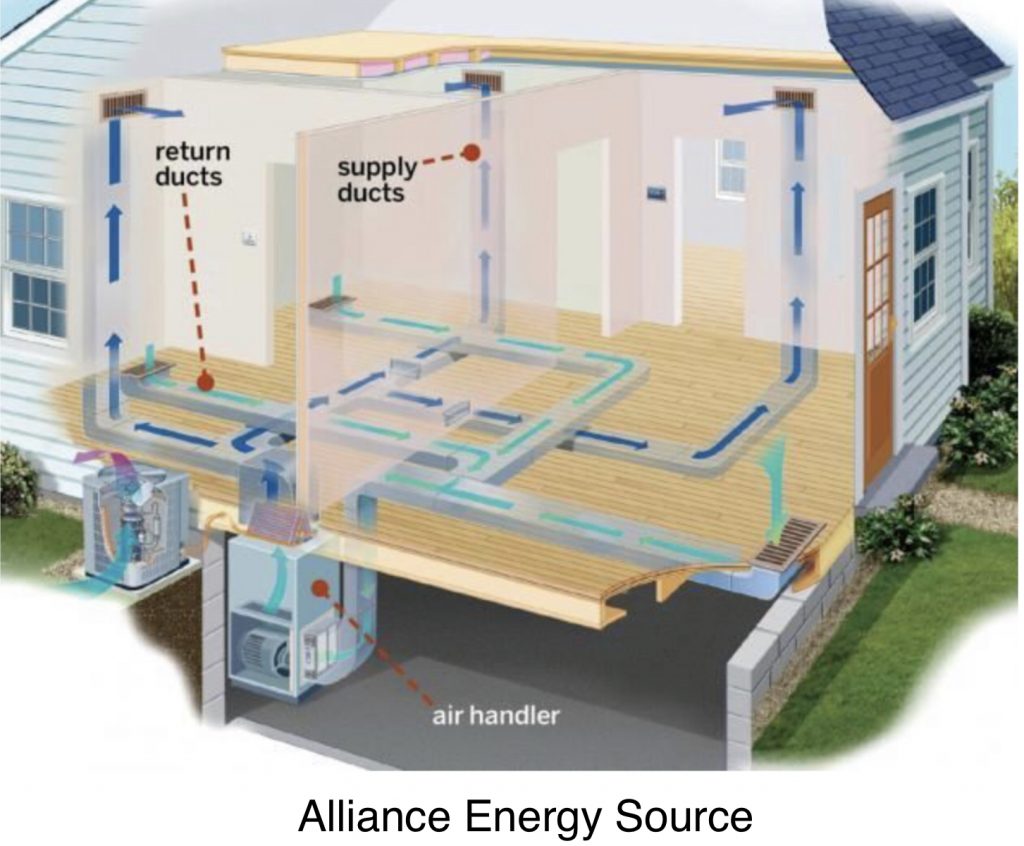
Heating, ventilation, and air conditioning (HVAC) systems are common in today's times across residential and commercial spaces. There are 4 types of HVAC systems, and in this post, we'll take you through them all in detail. Understanding the different types of HVAC systems would help you to select the system that's best for a specific space for providing optimum air conditioning, ventilation, and heating. So, without further delay, let's get started!
1. Duct-free systems
If you're on the lookout for an ultra-efficient HVAC system, look no further than duct-free systems. Also referred to as ductless or mini-split systems, each of these systems consists of the following:
- Heat pump or air conditioner
- Tubes and wires for connecting refrigerant to fan coil from outdoor unit
- Thermostat for temperature management
- Air-quality accessories for the indoor unit for improving air quality
Using duct-free HVAC systems has several benefits. They're much more energy-efficient than ducted systems. They're also regarded as the easiest HVAC system in terms of ease of installation. Duct-free systems also provide high air quality. However, these systems need regular maintenance for them to perform at their very best.
3. Packed systems
Packed systems are ideal for confined spaces where the installation of separate components can prove to be difficult. They're also the easiest HVAC system to maintain from the perspective of technicians, as all the components are part of a single package. However, packed systems also tend to require more maintenance than other types of furnace systems as they are mostly installed outside, where they remain ever exposed to the elements.
A packed system consists of the following components:
- The unit containing the air conditioner and gas furnace/heat pump
- A thermostat/interface on the unit's front that enables users to operate the system
3. Split systems
In today's times, split systems are the most popular HVAC systems. While split systems have separate indoor and outdoor units, which make them more difficult from a maintenance perspectives, they offer several benefits. The following components make up a split HVAC system:
- An outdoor unit (heat pump or air conditioner)
- An indoor unit consisting of furnaces responsible for refrigerant conversion and air circulation, and fan or evaporator coil
- Ducts for circulating air throughout a building
- Programmable or non-programmable thermostat for system management
- Humidifiers, purifiers, and other additional accessories
The biggest benefits of split systems are their energy-efficiency and low operating costs. However, along with maintenance, installation of these systems can be quite tricky.
4. Hybrid heat split systems
If you want a system that offers greater energy-efficiency than normal split systems, you should ideally choose a hybrid heat split system. A cost-effective hybrid heat split system consists of the following components:
- Heat pump
- Furnaces for refrigerant conversion and air circulation
- Evaporator coil
- Ducts
So, there you have it. The 4 types of HVAC systems - explained for heating and cooling in north york.